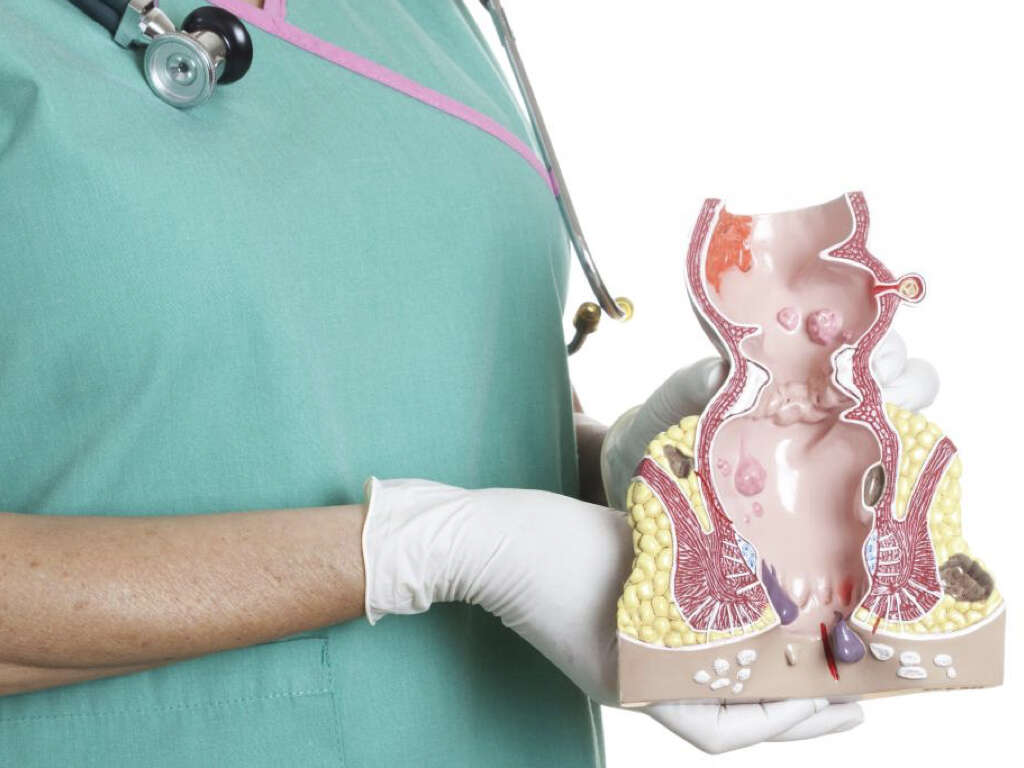
Rectal Prolapse Symptoms, Causes and More

Part 8 of 10
8. Rectal Repair Approach
Rectal procedures may be used in patients who are older or have existing medical problems. Rather than a general anesthesia, these patients may require epidural or spinal anesthesia.3 The common rectal repair methods are the Delorme and Altemeier procedures.
Advertisement
The Altemeier procedure involves cutting off or amputating the part of the rectum that emerges out of the anus and sewing two ends back together.4 In contrast, the Delorme procedure involves removing the fallen rectum’s inner lining and folding and stitching the outer layers.
Advertisement
Recommended


Article sources (4)
- 1.‘Rectal Prolapse Expanded Version.’ ASCRS, fascrs.org/patients/diseases-and-conditions/a-z/rectal-prolapse-expanded-version
- 2.‘Rectal Prolapse: Treatment, Diagnosis, Causes & Symptoms.’ Cleveland Clinic, my.clevelandclinic.org/health/diseases/14615-rectal-prolapse#:~:text=Is rectal prolapse just another, the anus and lower rectum
- 3.Jan Rakinic, MD. ‘Rectal Prolapse Treatment & Management: Approach Considerations, Nonoperative Management, Surgical Options.’ Medscape, 24 July 2020, emedicine.medscape.com/article/2026460-treatment
- 4.Trompetto, Mario, et al. ‘Altemeier’s Procedure for Complete Rectal Prolapse; Outcome and Function in 43 Consecutive Female Patients.’ BMC Surgery, BioMed Central, 3 Jan. 2019, bmcsurg.biomedcentral.com/articles/10.1186/s12893-018-0463-7#:~:text=Altemeier’s procedure is one of the pouch of Douglas