What Is Giardiasis?


1. Causes
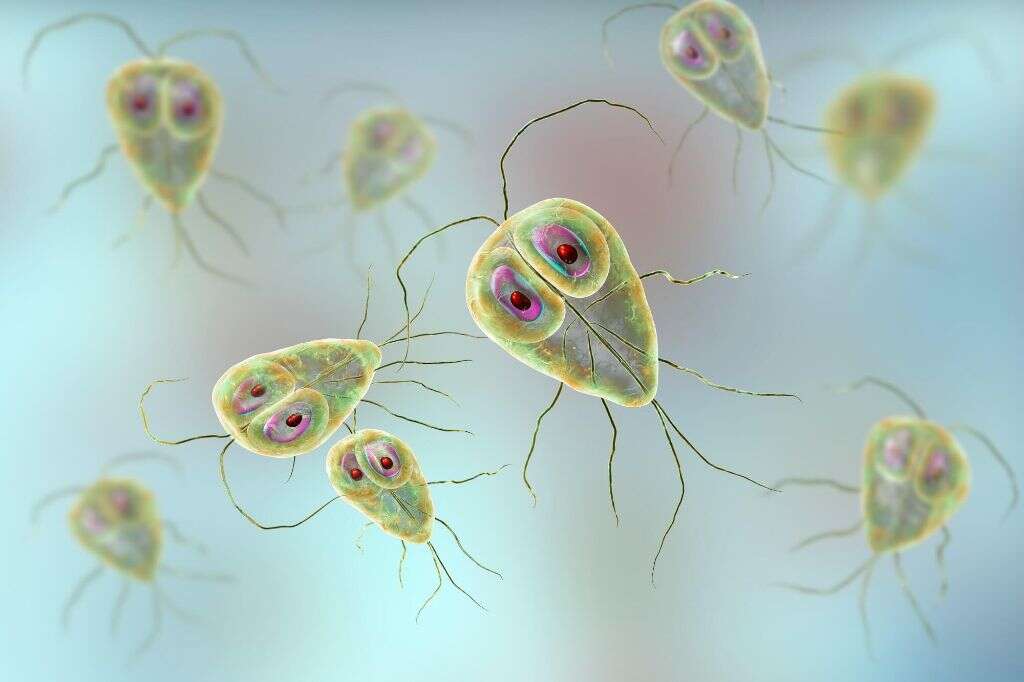
Giardiasis is caused by a protozoan parasite, a single-celled organism called Giardia lamblia. Inadvertently swallowing these microscopic organisms can lead to an infection as they use a sucker to latch onto the interior walls of your small intestine. For this reason, they are also sometimes known as Giardia intestinalis or Giardia duodenalis after the specific area of the small intestine, the duodenum, where they are most often found.
Giardia lamblia exists in one of two life states. An individual specimen is called a trophozoite when it is active in the small intestines. However, once it exits the body, it goes inactive, encasing itself in a hard shell called a cyst. It can exist in this dormant state for months at a time. Once ingested by a new host, however, the acid in the stomach activates the cyst and the trophozoite re-emerges. As few as 10 trophozoites in the small intestine can produce symptoms of giardiasis.