What Is Astigmatism?


Astigmatism is a condition that occurs as a result of an error in the structure and shape of the cornea. To understand astigmatism, it is necessary to look at the structure of the eye. The front area of the eye is the cornea, behind which is the lens of the eye. A normal cornea has a regular convex curve. When the corneal curve becomes irregular, astigmatism happens.
Normally, light passes through the cornea, the lens, and the eye fluid, and ends up on the retina. However, in case of astigmatism, the light does not pass normally, because it is distorted. This causes disturbed vision. Besides astigmatism, two other problems associated with how light refracts or passes through the eye are farsightedness (hyperopia) and nearsightedness (myopia).
1. Symptoms of Astigmatism
Astigmatism is usually asymptomatic. This means that most people will not experience any kind of symptoms. Even if some symptoms appear, they differ from one person to another. The most common symptom of astigmatism is blurry vision. The main complaint of people with astigmatism is having distorted vision that is not distance related.
Other symptoms include difficulty of seeing at night, eye strain, squinting, irritation of the eye, and headaches. If you feel that your vision is blurry all the time, it is time to visit an ophthalmologist to get your eyes checked. Note that some of these symptoms may also result from other health conditions.
2. Causes of Astigmatism
The irregular shape of the cornea is the main cause of astigmatism. Normally, the cornea is like a ball, with a symmetrically round shape. However, with astigmatism, the cornea will have an egg shape. One meridian, or half, either longitudinally or latitudinally, will be more curved than the equivalent half.
To simplify this, if we take the lens of the eye like the face of a clock, there would be two meridians: one connecting 12 and 6 and the other connecting 3 and 9.
3. Lens Distortion
Astigmatism does not always result from a misshaped cornea. It can also be caused by lens distortion, which causes distortion of the light entering the eyes with similar results to astigmatism caused by a misshaped cornea.
Therefore, there are two types of astigmatism: lenticular, related to lens distortion, and corneal, related to a misshaped cornea.
4. Astigmatism and Chronic Diseases
Some chronic diseases and conditions may have negative effects on the eyes. For example, Bell’s palsy may be associated with the inability to close the eyes completely, excessive tears, and/or dry eyes. It may result in astigmatism. Diabetes mellitus is common for its eye problems.
Cataracts, glaucoma, edema of the eyes, retinopathy, and other eye problems can lead to retinal detachment, and subsequently to astigmatism. Another chronic condition that may lead to astigmatism is Graves disease, which leads to bulging eyes, besides inflammation, redness, and irritation. Rheumatoid arthritis is also associated with some eye problems such as dry eye, scleritis, or uveitis, which may lead to astigmatism.
5. Complications of Astigmatism
Astigmatism should be corrected once discovered. If left uncorrected, it may lead to amblyopia or a lazy eye. Amblyopia means that the eye is not capable of achieving normal visual acuity. It is a visual developmental disorder that cannot be corrected even with the use of contact lenses or eyeglasses.
The condition is associated with astigmatism and it usually affects one eye. In some cases, it can affect both eyes. If lazy eyes are left untreated, the condition may lead to loss of vision permanently. Refractive amblyopia or anisometropic amblyopia is the type of amblyopia associated with astigmatism.
6. Disease Process
Astigmatism occurs as a result of a combination of internal and external causes. The external surface is the cornea and the internal causes include the lens, retina, posterior surface of the cornea, and the eye fluids. The disease process differs from one patient to the other depending on the causative factors. In some people, the internal causes predominate and in other cases, external causes do.
Symptoms can appear at any stage and in any sequence. The diagnosis of the condition depends on analyzing the factors contributing to refraction. After all, when a certain component of the eye gets affected, the whole eye, including its ability to refract light, is also affected.
7. Can Astigmatism Benefit from Lifestyle Changes?
The answer is yes. Astigmatism and other eye problems can benefit from some lifestyle changes. Quitting smoking is one of the best things to do for your eyes and indeed your overall health. Smoking causes inflammation in the eyes and cataracts. Smoking may also lead to blindness in old age.
Astigmatism, if not inherited, can benefit from regular exercise. Other eye problems such as glaucoma, diabetic retinopathy, and macular degeneration can also benefit from regular exercise. Wearing eyeglasses that can prevent UVA and UVB is important to protect the eyes. Note that astigmatism can be one of the results of the damages caused by overexposure to sun rays.
8. Diagnosis
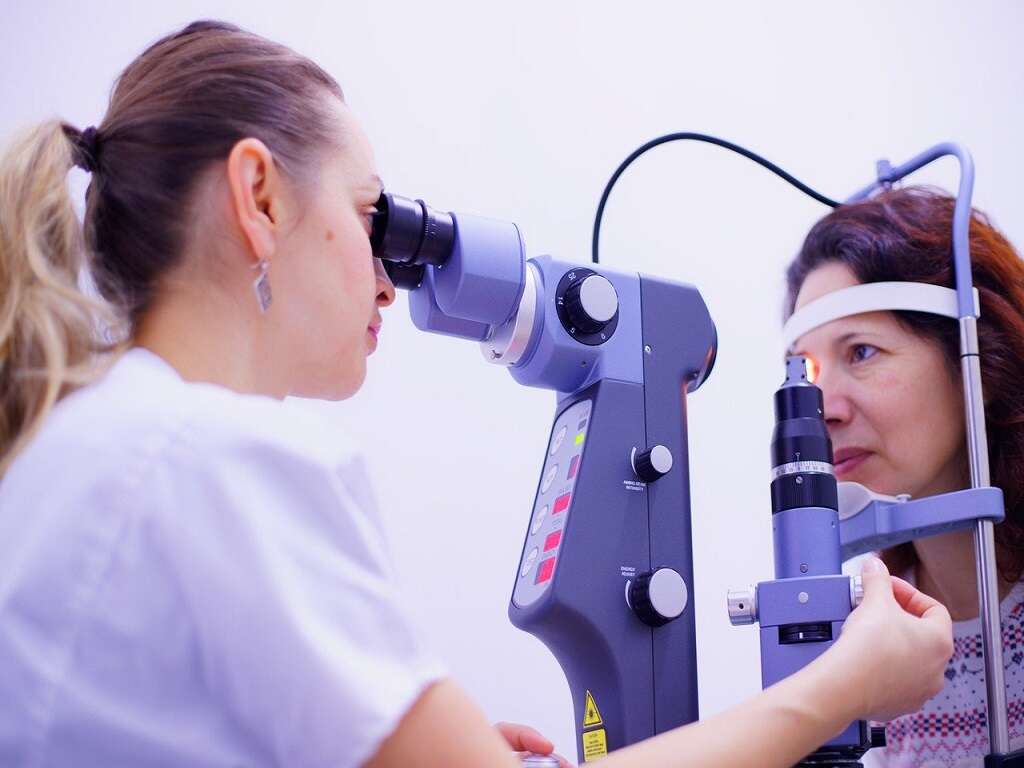
Some tests can be done during your eye examination to determine whether you have astigmatism or not. If you have astigmatism, the tests can determine its gravity and axis too. The use of a tool called the Snellen chart can determine whether your visual acuity is decreased or not. If it is decreased, a keratometer can determine the curvature of the meridians of the cornea to diagnose astigmatism.
A corneal topography may also be done to see the shape of the cornea and how it looks. Other tests such as retinoscopy, sunburst chart, Javal’s rule, analysis by Alpins, and the use of a stenotic slit can be done too to determine all the aspects of the astigmatism.
9. Treatment
Mild astigmatism cases do not require treatment. However, treatment options are available for people who may suffer from vision problems due to astigmatism. The first treatment option is corrective lenses. This is the most common treatment option for astigmatism. Orthokeratology, also known as Ortho-K, involves wearing Ortho-K glasses for a while to correct the irregularity of the corneal curvature.
Ortho-K glasses can help return vision to its state before astigmatism. Surgical intervention is the last treatment option. Lasers and minor knives are used to reshape the curvature of the cornea. Surgery is a permanent way to treat astigmatism. Your doctor should discuss with you all the treatment options and help you in choosing the best treatment plan for your astigmatism.
10. Long-Term Outlook
If left untreated, it will no longer be just about astigmatism because other eye problems will most probably appear. The reduction of visual acuity is just the beginning. Dry eyes, inflammation, cataracts, glaucoma, and other eye problems may follow. Generally, astigmatism cannot be prevented. Therefore, once it happens, it should be corrected.
Once astigmatism is corrected, you do not have to worry about it anymore because it will not happen again in your lifetime.