Impetigo Causes, Symptoms & Treatments

By Jolene
Part 4 of 9
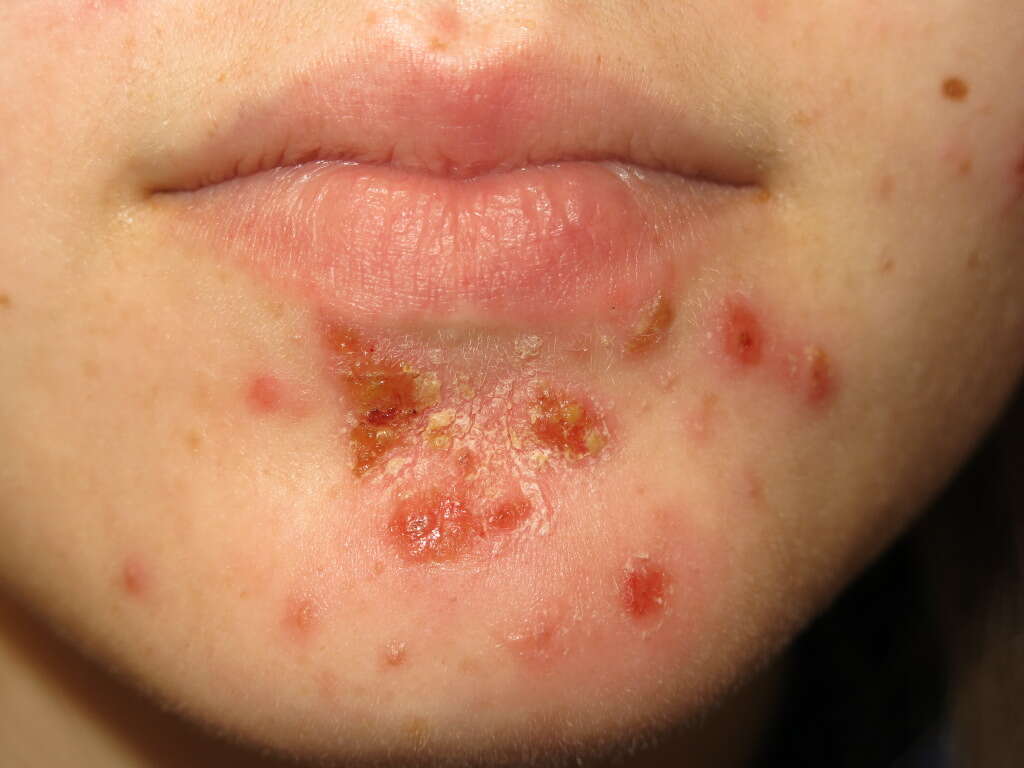
Symptom #1: Skin lesions
Patients with nonbullous impetigo begin with a single red lesion on the skin that turns into a vesicle or pustule that ruptures and releases its contents. Thus, a dry, honey-colored exudate ends up covering the erosion forming a crust. These lesions can spread, and mostly affect the face and extremities.
Advertisement
Patients with bullous impetigo report small or large superficial lesions called bullae (blisters containing serous fluid) that quickly rupture and spread locally (face, trunk, and upper extremities) through autoinoculation (i.e. scratching). Since these lesions are fragile they can rupture quickly and only their remnants (collarettes) may be seen at presentation.
Advertisement