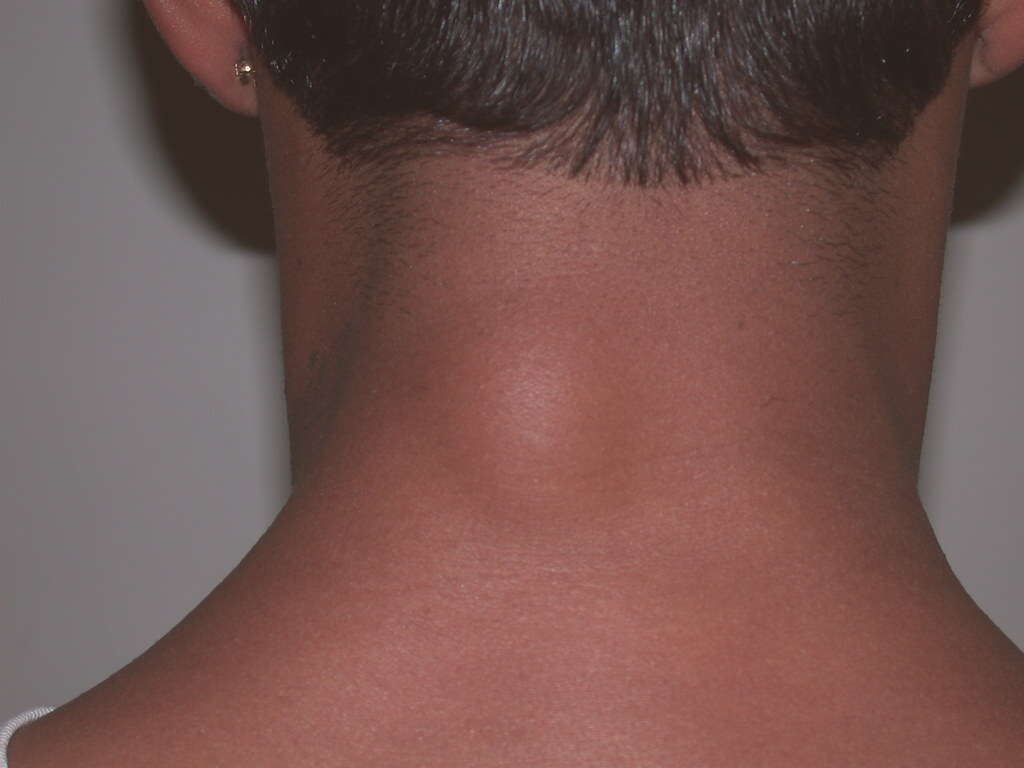
Sebaceous Cyst Causes, Treatments & More

 Article Sources
- 1. Publishing, Harvard Health. 'Sebaceous Cysts.' Harvard Health, Dec. 2018, www.health.harvard.edu/a to z/sebaceous-cysts-a-to-z.
- 2. The Editors of Encyclopaedia Britannica, et al. 'Sebaceous Gland.' Encyclopædia Britannica, Encyclopædia Britannica, Inc., 20 July 1998, www.britannica.com/science/sebaceous-gland.
- 3. 'Sebaceous Cysts: Treatment & Cause.' Sebaceous Cysts, Cleveland Clinic, https://my.clevelandclinic.org/health/diseases/14165-sebaceous-cysts.
- 4. 'Anesthesia' NHS Choices, NHS, 14 June 2018, www.nhs.uk/conditions/anaesthesia/#:~:text=local
- 5. 'Nonmelanoma Skin Cancer.' _Mayo Clinic_, Mayo Foundation for Medical Education and Research, 28 Jan. 2020, www.mayoclinic.org/diseases-conditions/sebaceous-carcinoma/cdc-20352957.
4. What Kind of Doctor Removes Sebaceous Cysts?
A general practitioner can diagnose and care for a sebaceous cyst, prescribing non-invasive treatments when needed. However, if the cyst is suspicious looking or located in a bothersome area such as the scalp, face or neck, the doctor may refer the patient to a dermatologist for examination.
A dermatologist can perform a punch biopsy to check for cancer. Once the results are back, they can suggest treatment. If the cyst is benign, drainage or lancing is an option to reduce the discomfort.